
Democratic Placemaking & Nature for Affordable Housing
A Look Back at the Highlights from the NEB Festival 2026 Satellite Event in Catanzaro
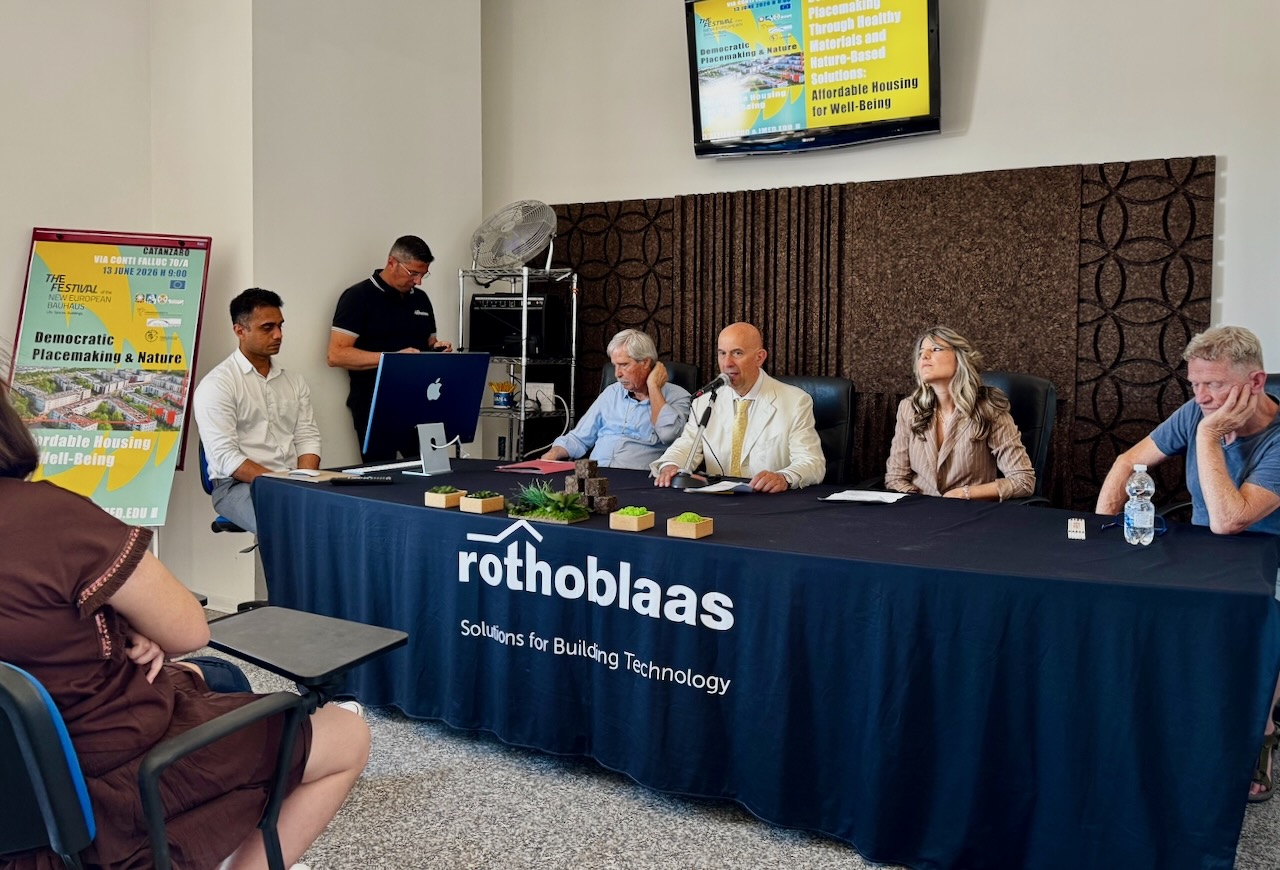
17 giugno 2026 — On Saturday 13 June, Catanzaro became one of the focal points of the European debate on housing. Officially recognised by the European Commission as an official satellite event of the NEB – New European Bauhaus Festival 2026, it was one of the very few selected in Italy: an intensive one-day programme on Home, Health, Nature and Democracy that brought together different generations, disciplines and political orientations around the same table.
The event was organised by AARCH – Alfieri Architettura srl in partnership with iMED – Mediterranean Institute of Design, a Social Promotion Association.
Taking its inspiration from the Bauhaus, the most influential school of architecture, design and art of the twentieth century, the New European Bauhaus (NEB) is a European Commission initiative that redefines how we conceive and build the places where we live: beautiful, sustainable and inclusive. It is not only a policy; it is a movement involving architects, designers, businesses, communities and public authorities across Europe. Alongside many technical and political initiatives, its most visible moment is the NEB Festival, which in 2026 reached its third edition with a dense programme of events held in Brussels from 9 to 13 June, gathering thousands of participants from across Europe and beyond around a shared vision of a future built with more beauty, greater care for the environment and more attention to people.
Alongside the central event in Brussels, the European Commission officially promoted and recognised a network of satellite events, organised independently by selected organisations across Europe and beyond. Held in parallel with, or in the immediate vicinity of, the main Festival, these events share its values and themes and bring the European conversation into local territories. They are not merely local initiatives: they form an integral part of the official programme of the NEB Festival 2026. The Catanzaro event of 13 June sits precisely within this framework; its application was formally accepted by the European Commission, which describes satellite events as “an important part of the Festival programme, connecting participants to NEB-aligned initiatives across Europe”.
The Catanzaro satellite event was designed as a single intensive day to explore how accessible housing can become a lever for democratic participation and well-being in European communities. The format combined direct experience of materials, co-design, a themed film screening and political dialogue, with the aim of producing prototypes and operational recommendations.
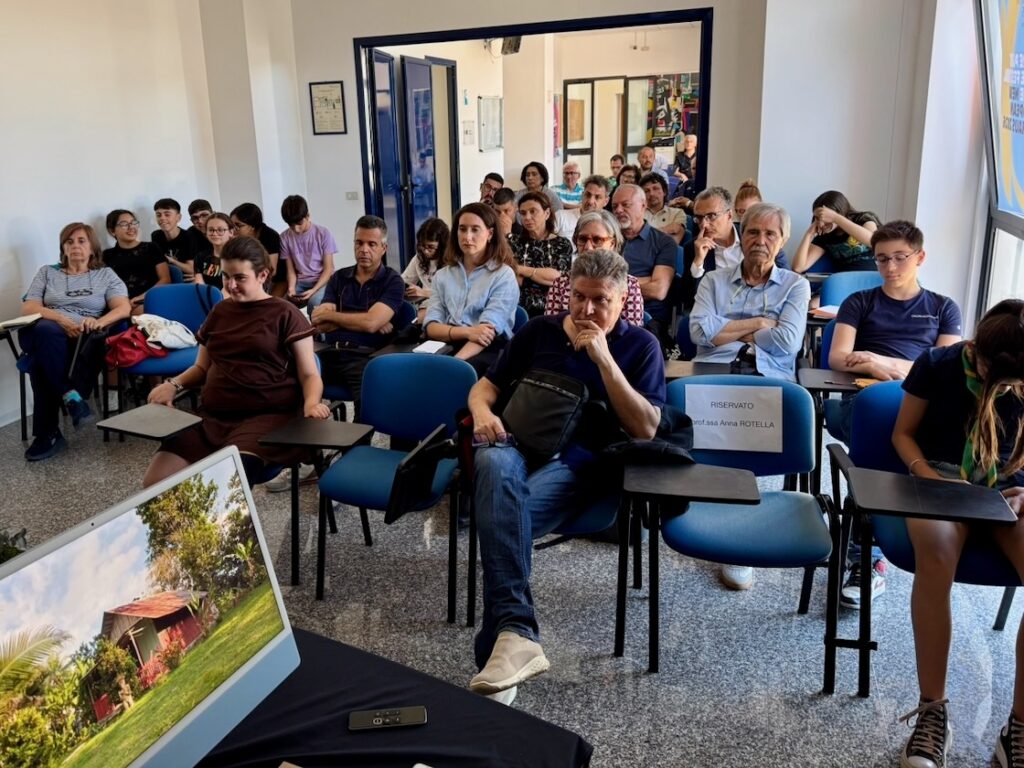
An urgent question uniting Europe
The day opened with architect Ivan Alfieri, President of the Mediterranean Institute of Design (iMED APS ETS) and Creative Director of AARCH – Alfieri Architettura srl, who set the intellectual coordinates of the entire event: “Why must democracies rethink affordable housing – and why must homes be healthy and for everyone?”
The construction of affordable housing has been chronically underfunded and long governed by discriminatory housing policies. Over the years, the use of poor-quality, low-cost and toxic building materials has proved to be directly linked to serious health risks for low-income families. Harmful chemicals coat building materials. Lead poisons water pipes. Cancer-causing fire-retardant insulation saturates walls. PFAS — the notorious forever chemicals — are found in many industrial materials used in construction. Indoor air pollution has produced an alarming rise in childhood asthma in social housing neighbourhoods across Europe. In this light, choosing materials in accordance with Nature is not merely an aesthetic or cultural statement: it is a measurable public health choice.
Yet, Alfieri stressed, even modest interventions, if driven by conscious material choices, can radically improve community health. Practical knowledge on material specifications, participatory design methodologies and techniques for integrating Nature-based Solutions is already in the hands of designers, contractors and policymakers: “A healthy home must not be a privilege for the few. It is a fundamental universal right. And by reconnecting homes with Nature, we can bring about a significant improvement in people’s health and lives”.
Bringing greetings on behalf of professional bodies, engineer Gilda Rita Lifrieri situated the event within the wider context of economic and professional development in the region, focusing on two key issues that are often underestimated in the construction sector.
First, the extraordinary capacity of outdoor activities to engage younger generations, as demonstrated by the enthusiasm of lower secondary school pupils in the Co-Design Lab — giving young people a concrete, tactile and creative experience also means guiding them towards more conscious and healthy professional and life choices. Second, the urgent need to reduce gender discrimination in the construction sector, where both professional practices and building firms remain largely male-dominated. The audience clearly welcomed this call.
The experiential workshop: natural materials as a sensory experience
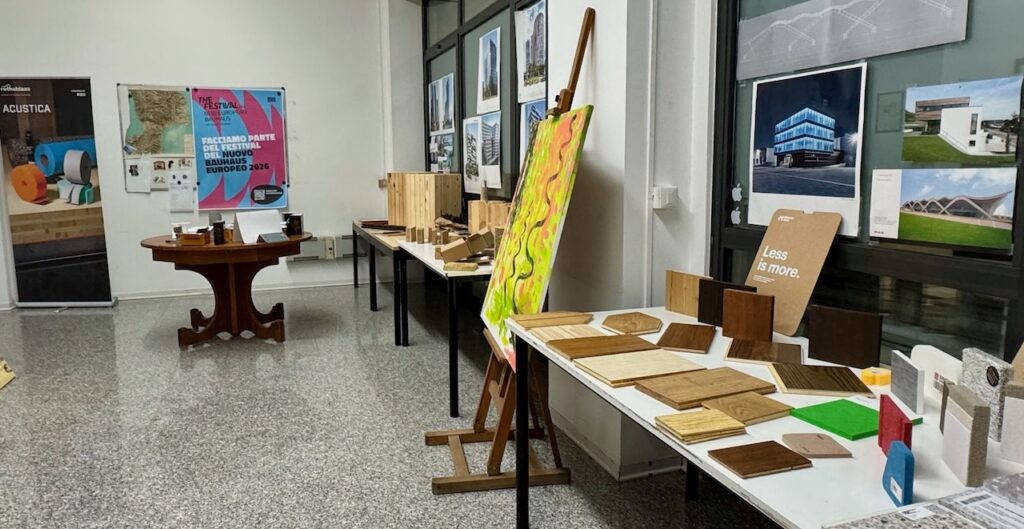
The technical core of the morning was the experiential materials workshop, which brought together some of the most innovative companies in the sector around timber, clay, cork and Nature-based Solutions.
But before taking their seats, before listening to or uttering a single word, every participant had to pass through the “sensory tunnel” — a long, narrow passage lined with exposed-face cork panels — touching, smelling, feeling. It was, quite literally, each participant’s first encounter with the event: an eloquent design gesture, a physical manifesto of the idea the event sought to affirm, namely that healthy homes begin with the conscious choice and use of materials.
This is why the exposed-face cork panels of the tunnel, or the solid timber samples, the raw clay blocks and the hemp panels in the exhibition space, were not trade-fair displays: they were the heart of the programme. Following this thread, the presentations then explored the origins of those materials and the ways in which they are used and reused, as well as how spaces and buildings constructed with them can adapt to continuously evolving needs.
Pietro Fiorenza of Rothoblaas, illustrated the importance of ensuring that the installation of such materials guarantees precision in execution and airtightness in residential buildings. The presentation also addressed construction site safety, proposing regional legislative measures that would make it compulsory on building sites to use lifeline systems for roof work and first-aid kits for lifting injured workers — provisions that are vital in the event of workplace accidents, as daily news reports continually remind us.
Ulrich Pinter, for Ton Gruppe of KASAN, and Domenico Vecchio, for Lina Haus of LENECO, explored the sensory dimension of materials “according to Nature”: coming close to timber, clay and cork means learning again to feel, to touch, to smell and to breathe healthy air — an experience that “ultra-processed” materials from the petrochemical industry have progressively made us forget. In particular, Lina Haus solid timber walls eliminate thermal bridges — a requirement that has become central in the European regulatory framework with the new “Minimum Requirements” decree and the RED III Directive — improving energy performance in a measurable way over a 30‑year horizon and confirming that sustainability and economic affordability are not in contradiction: life-cycle analysis shows that natural materials cost less in the long term.
The products of Tecnosugheri, brought to life through the installation of the “sensory tunnel”, completed the picture with a demonstration of cork’s performance as a regenerative insulating material, capable of combining acoustic and thermal properties with the sustainability of the construction supply chain. It was a message that Tecnosugheri conveyed with remarkable clarity, making it tangible and accessible to a diverse audience: professionals, administrators, students, and citizens alike. Not a technical data sheet, but a direct, lived experience. Precisely the format that had been envisioned for this event.
To close the session, Zahir Siyad, legal representative of I‑BRICK — a German start-up supported by the Deggendorf Institute of Technology — presented a low‑cost artificial-intelligence-based solution for structural monitoring and risk prediction in homes: advanced technology which becomes democratic precisely because it is economically accessible where it is needed most.
The Co-Design Lab: young people building the future of cities
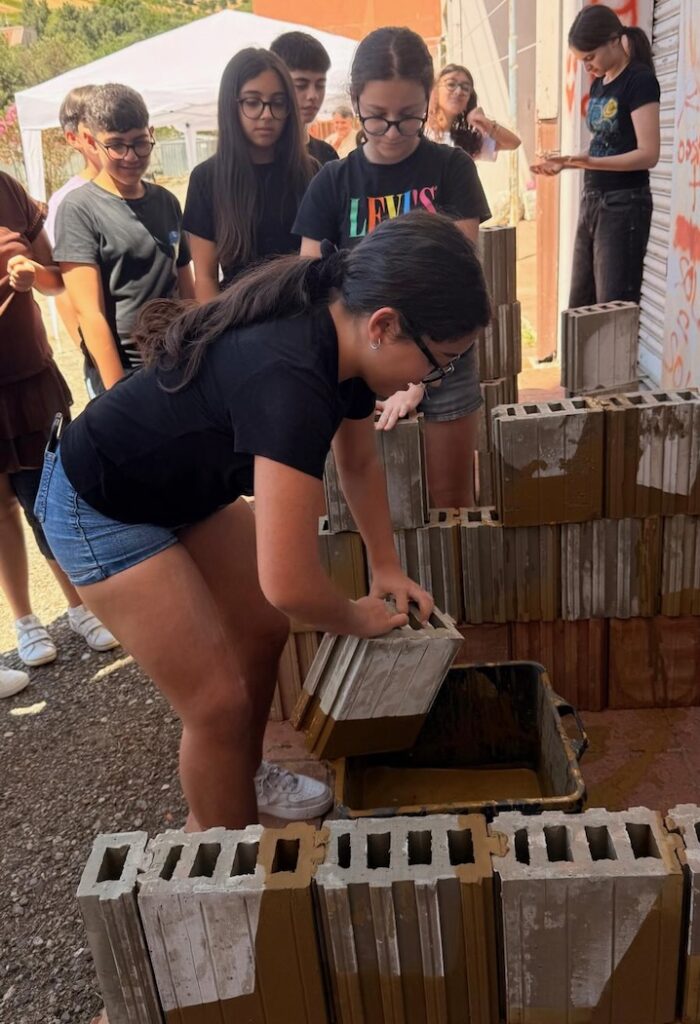
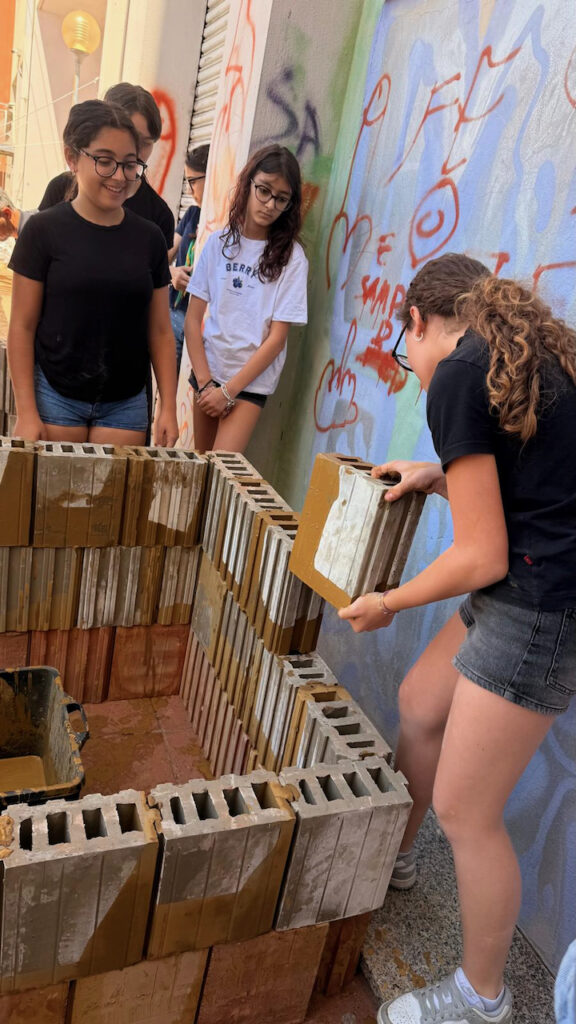
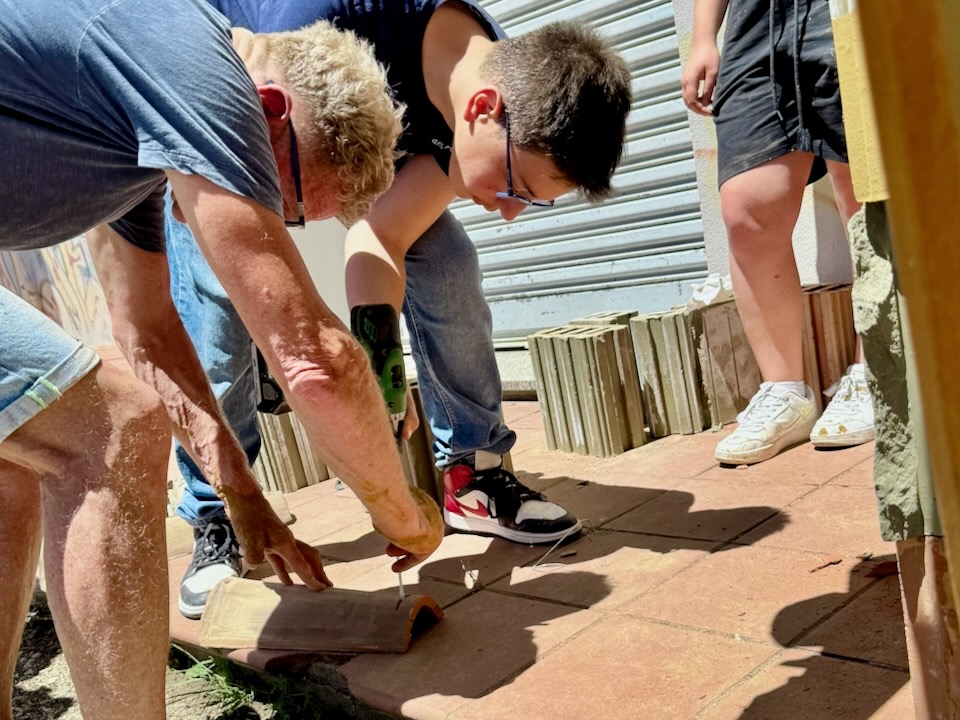
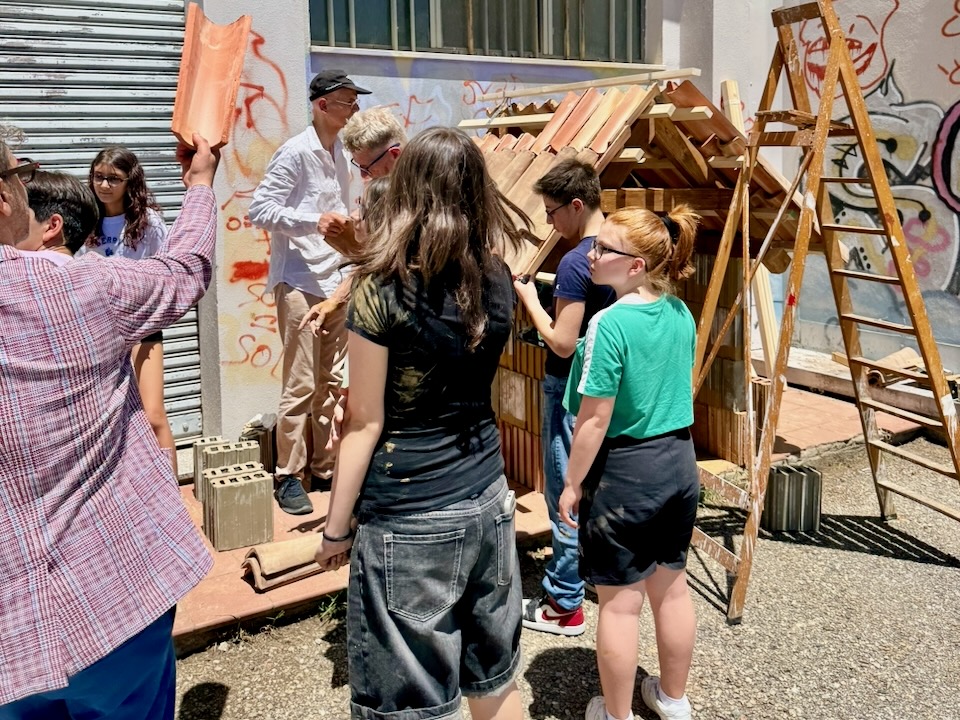
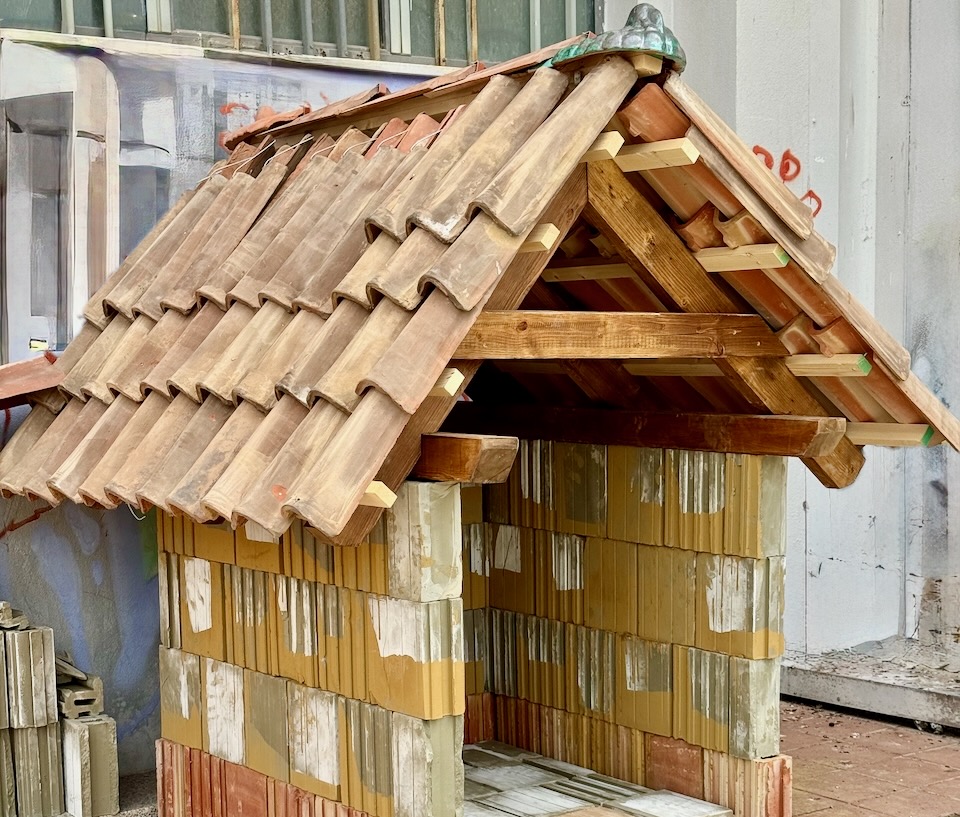
In parallel with the materials workshop, the Co-Design Lab — led by natural materials expert Ulrich Pinter under the supervision of architect Rosario Fabio Alfieri, engineer Nicola Billa and engineer Giuseppe De Santis, respectively legal representative and members of the AARCH design team — put lower secondary school girls and boys centre stage as they co-designed prototypes of homes built with healthy materials.
The enthusiasm with which the youngest participants immersed themselves in building with timber and clay revealed something precious: outdoor manual activities can outcompete mobile phones and digital entertainment. Not as a rejection of modernity, but as a rediscovery, by adolescents, of natural materials and of a city that belongs to them as well, not only to adults with cars. “I didn’t know you could build a house with clay,” commented Chiara, one of the 12‑year‑old participants. The parents also recognised the value of the event and their children’s enthusiasm: “Thank you for this experience and the opportunity given to the kids – Giovanni was really excited.”
The active participation of these very young people as co-authors — one of the central objectives of the event — confirms that democratic involvement in housing choices can and should begin already in primary school.NEB
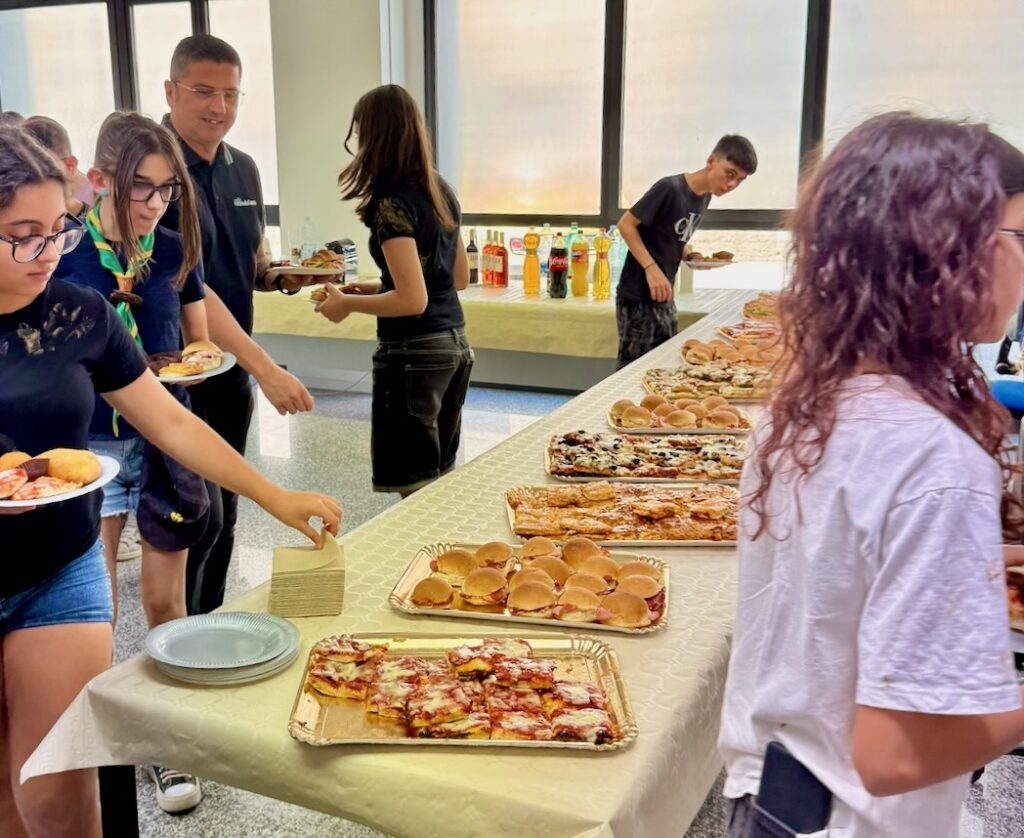
Lunch as a space for conviviality and networking
The lunch break, harnessing the conviviality of eating together, became an opportunity for networking. Among the materials and prototypes of the partner companies, participants continued to talk, building informal and transversal relationships. Company representatives responded to the many requests for information that had already emerged during the morning presentations, confirming that the chosen format — alternating the three phases of the construction process (theoretical and design, practical material exploration, and site application) — generated precisely the kind of interaction envisaged as one of the key impacts of the event.
From Calabria to Europe: €100 million and an award-winning film in Belém
In the afternoon, Vice-President of the Calabria Region, On. Filippo Mancuso, chose to begin his contribution not from housing, but from the planning framework within which any housing policy must be situated. In Calabria, of 404 municipalities only a minority currently have an in‑force Municipal Structural Plan (PSC), estimated at around 60–70, against a widespread delay in implementing Regional Law no. 19/2002. This gap affects every intervention, generating a generalised risk of wasting public funds. The Region is working to remedy this situation and to orient its policies towards compliance with the “zero land take” law — prioritising refurbishment over new construction and addressing climate change adaptation by mitigating hydraulic risk.
The most politically significant moment of the day came when Vice-President Mancuso announced that the Calabria Region will shortly launch a call for around €100 million for public residential housing. If steered towards NEB criteria — healthy materials, Nature-based Solutions, democratic participation — this funding could tangibly transform the region.
The ensuing debate — with contributions from the floor and the explicit support of the Mayor of Petrizzi, despite belonging to an opposing political camp — showed that when the ideas are sound, agreement can be reached.
The subsequent award of certificates to the young Co-Design Lab participants concentrated the deeper meaning of the entire day into just a few minutes. Presenting the certificates together were Vice-President Mancuso and the Mayor of Petrizzi, Giulio Santopolo — two institutional representatives from opposite sides of the political spectrum, united in recognising the value of the youngest generation.
The audience then watched, with great interest, the screening of the film “Our Future: Built by Nature” — produced by the international cultural partner Stichting Built by Nature, a non-profit foundation based in Amsterdam. Narrated by Kevin McCloud, with contributions from Sir David Attenborough and Marina Silva, Brazil’s Minister of the Environment, and awarded at COP30 in Belém, the documentary presents six pioneering international projects, showing how our homes — responsible for almost 40% of global emissions — can be transformed through timber and Nature-based materials, helping to address the climate crisis. The screening fuelled the debate and set the stage for the closing round table.
The Round Table: from vision to concrete political action
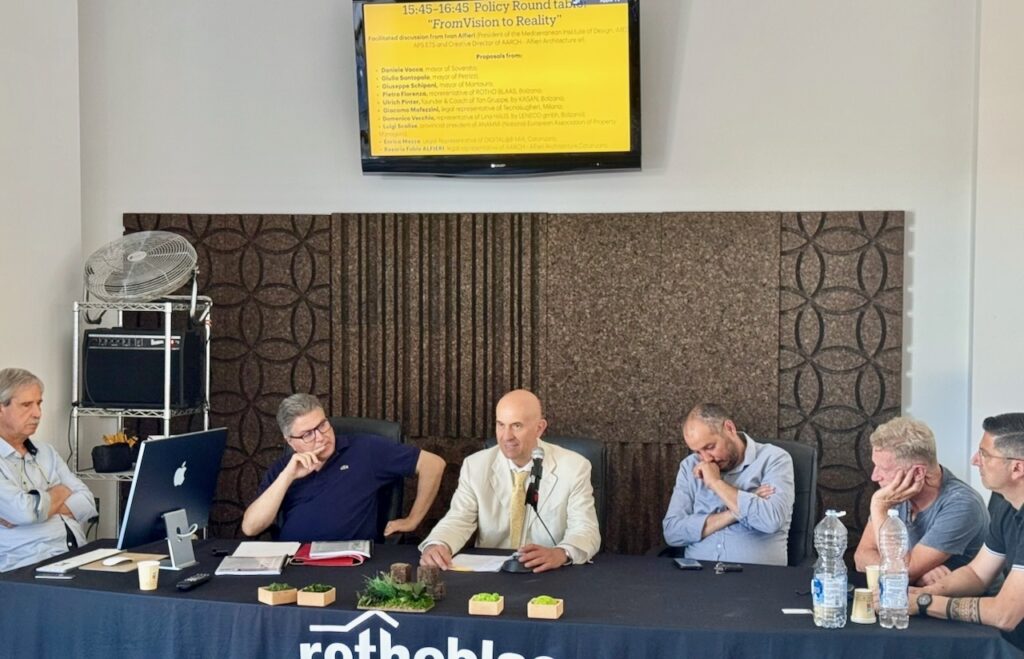
The round table “From Vision to Reality”, moderated by Ivan Alfieri, brought together mayors, material producers, property managers, entrepreneurs and professionals — exactly the kind of multi-stakeholder, multi-level governance considered essential to generate concrete and truly scalable policy recommendations.
Luigi Scalise, provincial President of ANAMMI (National European Association of Property Managers), focused on the concrete opportunities of improving the energy performance of the residential stock from the perspective of property management — a viewpoint often absent from debates among designers, yet crucial to building long-term policies and measuring impacts over time.
The Mayor of Petrizzi, Giulio Santopolo, reiterating his support for defending land by refurbishing existing historic buildings and adapting to climate change, then presented a major project launched by his administration: the refurbishment of the public housing stock in the municipalities of Petrizzi, Soverato and Montauro, awarded through a European tender to AARCH – Alfieri Architettura and currently awaiting funding from the national Energy Services Operator (GSE). This project fully embodies the intertwining of genius loci, democratic participation and long-term sustainability — the key themes running through the entire day.
Architect Rosario Fabio Alfieri, legal representative of the integrated architecture and engineering studio titled Alfieri Architettura, then shifted the focus to the cultural impoverishment of Italian society and the need for public investment in education to foster a new Italian Renaissance, bringing attention back to architectural and artistic quality in the built environment — both in individual homes and in cities as unique spaces for life.
Conclusions of a day that does not end here
To close the day, architect Ivan Alfieri drew together the threads of an experience that achieved — and in some cases exceeded — the objectives stated at the outset. Participants left with practical knowledge of natural material specifications, participatory design methodologies, techniques for integrating Nature-based Solutions and political-level actions to embed democratic participation in affordable housing initiatives across European municipalities. The round table generated concrete recommendations, and the interdisciplinary network activated during the day — among companies, professional bodies, public administrators and communities — represents the relational infrastructure on which to build the long-term impact of the event.
Alfieri warmly thanked everyone present — who will receive continuing professional development credits from their respective professional bodies — and, even more, the speakers and partners who helped make the event possible in different ways:
- Stichting Built by Nature (Amsterdam) — international cultural partner
- Rothoblaas (Bolzano) — funding partner
- Lina Haus – LENECO GmbH (Bolzano), Ton Gruppe – KASAN (Bolzano), Tecnosugheri (Milan) — material partners
- Order of Architects, Order of Engineers and College of Surveyors of the Province of Catanzaro — professional partners
- CNC (Maida, CZ) and Leader Plast (Melissa, KR) — supporting partners.
As noted at the beginning, the satellite event received recognition from the European Commission, the Italian Republic – Ministry of Culture, the Calabria Region and the Chamber of Commerce of Catanzaro, Crotone and Vibo Valentia.
The architect Ivan Alfieri expressed the hope that the impact of the event would not be confined to a single day, wishing that further meetings and cultural events on contemporary architecture would follow in the coming months, with news and results disseminated through the NEB platform and the AARCH and iMED websites. He concluded:
“Among the few official satellite events of the NEB Festival 2026 recognised by the European Commission in Italy, the Catanzaro event has shown that when we talk about Home, Health, Nature and Democracy with seriousness, openness and concreteness — bringing young citizens, professionals, entrepreneurs, mayors and regional representatives around the same table — dialogue between different generations, disciplines and political orientations is not only possible: it is necessary, and it produces concrete, positive results.”
Event organised by AARCH – Alfieri Architecture srl (alfieri.pro) in partnership with Mediterranean Institute of Design – iMED APS ETS (imed.edu)
Official Satellite Event | NEB Festival 2026 | European Commission
Catanzaro, 13 June 2026
Leave a Reply